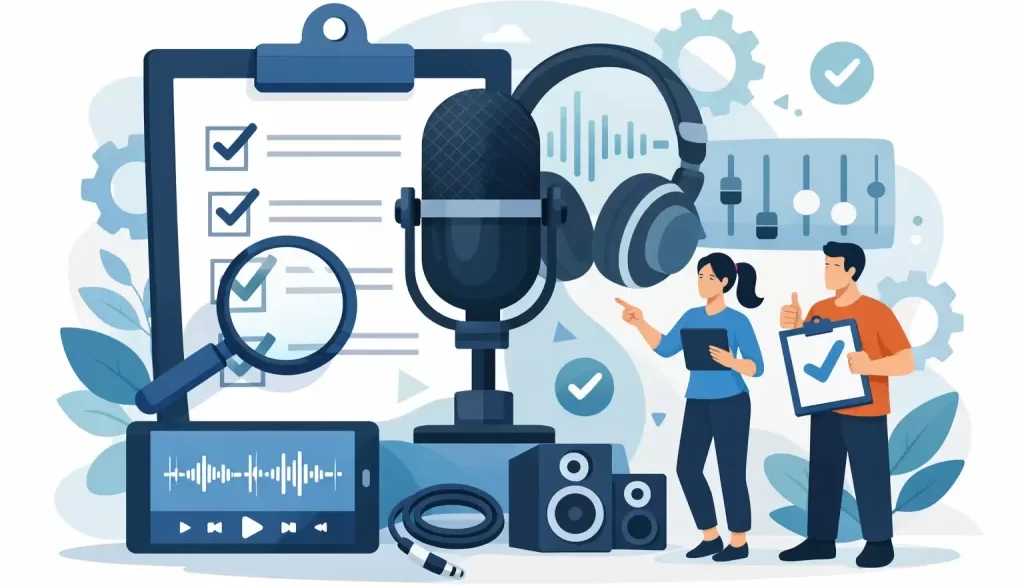
One bad episode can undo months of steady audience trust. A guest sounds thin, the intro is louder than the interview, an advert cuts in abruptly, or the wrong file gets published. None of these mistakes are unusual, but all of them are avoidable with a proper podcast quality control checklist.
If your show represents your business, your personal brand, or a paid content offer, quality control is not a nice extra. It is part of how you retain listeners, protect credibility and create a podcast people are willing to recommend. The best shows do not sound polished by accident. They sound consistent because someone checks the right things, in the right order, every single time.
Why a podcast quality control checklist matters
Podcast listeners are forgiving about the occasional imperfection. They are far less forgiving about inconsistency. If one episode is clean and clear and the next is distorted, unbalanced or confusingly edited, people start to lose confidence in the show.
That matters commercially. Poor audio quality affects completion rates, repeat listening and the likelihood that a listener will take the next step with your brand. If you sell services, courses, books or sponsorship inventory, amateur production values can quietly reduce results long before anyone complains.
A checklist also saves time. Without one, teams rely on memory, rushed approvals and last-minute fixes. That is when details get missed. A repeatable process reduces errors, makes handovers easier and helps you publish with more confidence.
The podcast quality control checklist before editing
Quality control starts before anyone touches the timeline. If the source recording is disorganised, post-production becomes slower and more expensive.
First, confirm that all files are present and correctly labelled. This sounds basic, but it prevents avoidable confusion when there are multiple takes, separate guest tracks or replacement intros. Make sure the final recording matches the planned episode format and that any sponsor messages, trailers or calls to action have been supplied.
Next, listen for recording problems that may affect the edit. Room echo, clipping, internet dropouts, mic bumps and overlapping speech all require different decisions. Some issues can be improved. Others need a judgement call. For example, a brilliant interview with slight room noise may still be worth publishing, while a heavily distorted host track may damage the listener experience too much.
It also helps to identify the editorial aim before editing begins. Is this a fast-paced, tightly trimmed episode, or a more natural long-form conversation? Quality control is not only technical. It is about making sure the finished episode sounds like the show it is meant to be.
Editing checks that protect listener retention
This is where many podcasts either gain polish or lose it. Editing should remove distractions without making speech sound unnatural.
Start with pacing. Long pauses, repeated phrases, false starts and off-topic tangents all affect momentum. Not every pause needs removing, and not every stumble needs cutting. Sometimes leaving a little natural rhythm makes an episode feel more human. But if the conversation drags, listeners notice.
Then check transitions. Intros, interview sections, ad breaks and outros should feel deliberate. Abrupt cuts, mismatched ambience or music that starts too loudly can make even good content feel amateur. The listener should never be jolted out of the experience.
Dialogue clarity is another key checkpoint. Hosts and guests should be easy to understand throughout, even if they were recorded in different environments. That means checking volume balance between speakers, taming harsh frequencies where needed, and making sure one voice does not disappear beneath another.
Manual editing matters here. Automated tools can help with repetitive clean-up, but they often miss nuance. They may clip breaths too aggressively, leave awkward speech patterns untouched or flatten a conversation until it loses warmth. For commercially serious podcasts, human judgement is what keeps the result natural and professional.
Audio quality checks before export
A technically clean edit still needs a proper audio review. This is the stage where you catch the issues that can cost you listener trust.
Listen through on more than one device if possible. Studio headphones can reveal hiss, clicks and edits, but they do not always reflect how most people actually consume podcasts. Check the episode on standard earphones and a phone speaker too. If speech becomes difficult to follow on a smaller device, the mix may need work.
Pay close attention to level consistency. The host should not be markedly quieter than the guest. The intro music should not force the listener to reach for the volume control. Mid-roll adverts should not sound like they were pasted in from a different production entirely. Consistency is what makes a podcast feel premium.
Noise reduction also needs restraint. A little background sound is often preferable to over-processing that creates metallic artefacts or an unnatural texture. The goal is clarity, not perfection at any cost.
Finally, check the start and end of the file. Episodes should begin cleanly, without clipped first words or dead space, and they should end intentionally. A messy ending leaves a poor final impression, especially if there is a call to action, sponsor message or next-episode prompt.
Metadata and publishing checks often get missed
A surprising number of problems happen after the audio is finished. Publishing errors can make a strong episode look careless.
Check the episode title, description and episode number. These should be accurate, consistent with your brand and free from obvious errors. If you mention names, companies or products, verify spellings. If there is a guest, confirm their title and any agreed wording.
Artwork and show notes should also match the episode. Publishing the wrong thumbnail or reusing old copy sends the wrong signal. It suggests the show is rushed, even if the audio itself is excellent.
Then confirm the export settings and file version. Many teams have published draft exports, wrong mixes or unapproved edits simply because files were named poorly. A clear naming system reduces that risk immediately.
If your podcast includes ad markers, chapters or dynamic content, check those placements carefully. A mistimed advert can interrupt a key moment and damage the listening experience. That may seem minor, but for monetised podcasts it affects both audience satisfaction and campaign value.
Who should own the checklist?
That depends on the scale of the show. A solo host may manage recording, editing and publishing alone. A branded podcast may have multiple stakeholders, an editor, a producer and internal sign-off. Either way, ownership needs to be clear.
One person should be responsible for final quality control. Not shared responsibility. Not vague responsibility. A named final reviewer. That person should know the show format, understand the brand standards and have enough time to review the episode properly.
If your podcast is part of a wider business strategy, this is often where external support becomes valuable. A professional editor or production partner brings consistency, objective review and a process that does not collapse when the team gets busy. That is especially useful when turnaround is tight and reputational standards are high.
A simple quality control flow that works
The most effective podcast quality control checklist is not the longest one. It is the one your team will actually use every week.
A practical flow usually follows five stages: source file check, editorial edit, audio review, metadata review and final approval. Keep each stage focused. If everything is checked at once, things get missed. If each stage has a clear purpose, problems are easier to catch before they reach the listener.
It is also worth reviewing your checklist every few months. Shows evolve. You may add video, sponsorship, guest booking support or multiple editors. Your quality control process should reflect the current production, not the version of the podcast you launched a year ago.
What a good checklist really delivers
A good checklist does more than prevent mistakes. It creates consistency your audience can hear. That consistency makes your podcast easier to trust, easier to recommend and far more commercially credible.
For some shows, that means better listener retention. For others, it means stronger sponsor confidence or a more polished route into selling services and products. Whatever your goal, quality control is part of the result, not separate from it.
At Pure Podcasting Ltd, this is exactly why human review still matters. A polished podcast is not just edited. It is checked properly, with care, context and an ear for what your audience expects. If your show needs to sound professional every time, treat quality control as part of the production, not an afterthought.
The simplest test is this: before you publish, ask whether the episode sounds good enough to represent your brand at its best. If the answer is anything less than a clear yes, it needs one more pass.