If an episode takes three hours to record and another six to rescue afterwards, the problem usually is not your microphone. It is your podcast post production workflow. For founders, brands and serious creators, that workflow is where audio quality, publishing consistency and listener trust are either protected or quietly lost.
A strong process does more than tidy up a recording. It helps your show sound commercially credible, keeps turnaround times predictable and gives each episode the same level of polish. That matters whether you are trying to impress sponsors, build authority in your sector or simply make sure a new listener does not switch off after 90 seconds.
What a podcast post production workflow should actually do
Post production is often treated as a technical clean-up stage. In practice, it is a quality control system. The aim is not just to remove mistakes. It is to shape the episode into something that sounds clear, paced, confident and worth a listener’s time.
That means balancing several priorities at once. Audio needs to be clean, but not over-processed. Edits need to be tight, but not so tight that the conversation sounds unnatural. Turnaround needs to be efficient, but not rushed to the point where small errors slip through. If you care about retention and brand perception, those trade-offs matter.
The best workflows are built around repeatability. Every episode should pass through the same core stages, with room for exceptions when the format demands it. A solo thought-leadership show needs a different editing touch from a multi-guest interview, but both benefit from a defined process rather than improvisation.
The core stages of a podcast post production workflow
A reliable workflow usually begins before any editing starts. File collection, naming conventions and version control are not glamorous, but they save a great deal of confusion later. Raw files should be stored properly, labelled clearly and backed up immediately. If you are recording separate tracks, this step becomes even more important because one missing file can hold up the entire episode.
The first active editing stage is a full review of the recording. This is where an experienced editor listens for structural issues, repeated answers, poor transitions, microphone inconsistencies, interruptions and any moments that may damage flow or clarity. It is also where commercial judgement comes in. Not every tangent should stay just because it happened live.
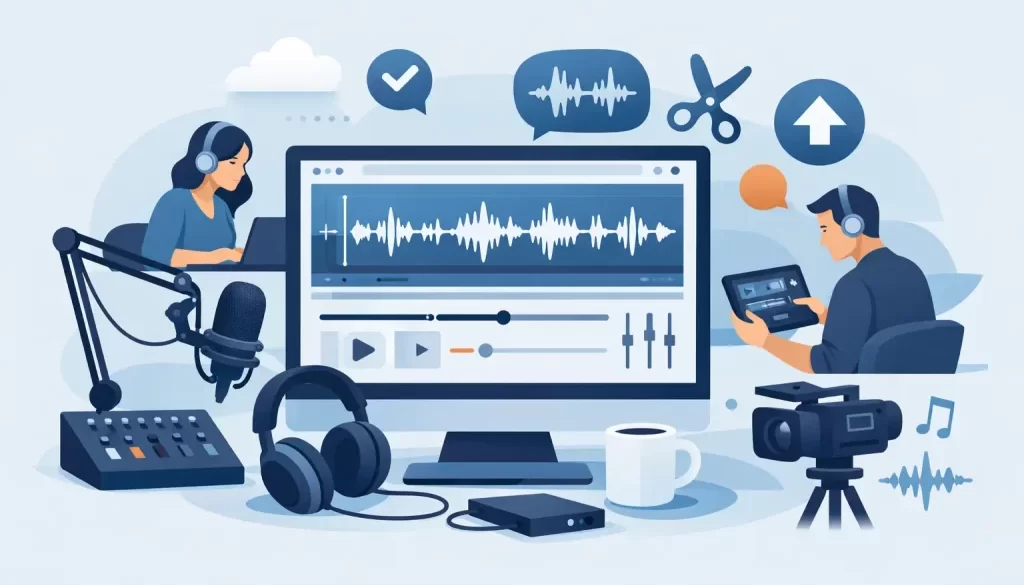
Once the structure is clear, detailed editing begins. This can include removing false starts, tightening pauses, reducing filler words where they distract, smoothing guest overlap and cleaning obvious background noise. If the episode has multiple speakers, levelling and tonal consistency become a bigger part of the job. Listeners will forgive a lot, but they will not enjoy constantly adjusting the volume.
After editorial shaping comes audio processing. This is the point where equalisation, compression, noise reduction and loudness matching are applied carefully. The key word is carefully. Heavy-handed processing can make speech sound brittle, hollow or fatiguing. Human judgement still matters here because software can only go so far before it starts damaging the natural character of a voice.
Then comes the assembly stage. Intro, outro, music beds, sponsor reads, ad inserts and calls to action are placed in the right positions and checked for pacing. A rushed intro can undermine authority before the main content begins. A badly placed advert can make the whole episode feel clumsy. These are not small details when your show represents your business.
The final stage is quality assurance. This means listening back with fresh attention, checking exports, confirming levels and making sure the correct deliverables are ready for publishing. At this point, a workflow should also cover show notes, titles, episode descriptions and any clipped assets if those are part of your release process.
Where most workflows break down
The biggest problem is inconsistency. Many podcasters edit one episode thoroughly, then rush the next because they are short on time. Over weeks, quality becomes uneven and publishing starts to drift. Audiences notice that kind of inconsistency even if they cannot describe it technically.
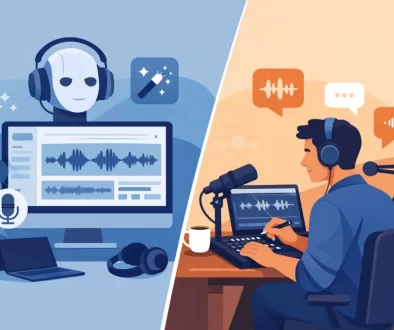
Another common issue is relying too heavily on automation. Automated tools can help with repetitive clean-up, but they are not a replacement for proper editorial judgement. They do not always recognise when a pause adds meaning, when a guest interruption should be softened rather than removed, or when an awkward sentence should stay because it sounds authentic.
There is also the problem of unclear ownership. If no one is responsible for the final sign-off, avoidable mistakes end up published. Wrong intro music, duplicated sections, abrupt cuts or mismatched loudness are nearly always process failures rather than talent failures.
How to build a workflow that saves time without cutting corners
The first step is to define your standard episode format. Decide what every episode must include, how long the intro should be, where any promotional message sits and what level of edit you actually want. Not every show needs every filler word removed. Not every conversation should be polished to the point it loses personality. The workflow should fit your format, not an abstract ideal.
Next, create a fixed order of operations. Reviewing structure before detailed clean-up usually saves time because there is little point polishing sections that may later be cut. Likewise, final processing should happen after the edit is locked, not before. The more predictable the sequence, the easier it is to delegate, scale or outsource.
Templates also help, but only when used sensibly. Session templates, export presets and checklists reduce friction and support consistency. What they cannot do is think critically about content quality. A good workflow uses templates to handle repetition while leaving room for human decision-making where it matters most.
Turnaround planning is another area where businesses often underestimate the pressure. If you record close to your publishing deadline, every small issue becomes urgent. A better system builds in enough time for edits, revisions and final checks without putting the episode at risk. Fast turnaround can be valuable, but only when the process behind it is controlled.
Why human editing still matters
For commercially focused podcasts, sounding polished is not just about cleanliness. It is about trust. A manually edited episode can be shaped with far more context than a tool acting on default settings. That matters when you are interviewing high-profile guests, managing multiple speakers or producing long-form content where pacing affects retention.
Human editors also catch strategic issues that software misses. They can flag repeated points, weak openings, sections that drag and moments where your call to action feels forced. That is especially valuable if your podcast supports a wider business objective such as lead generation, authority building or sponsor readiness.
At Pure Podcasting Ltd, this is exactly why founder-led, one-to-one support makes a difference. Clients are not just buying file processing. They are investing in a workflow that protects quality, keeps publishing dependable and helps the show sound its best every single time.
When to keep post production in-house and when to outsource
It depends on your priorities. If you have a simple format, plenty of internal time and a solid technical skill set, handling post production in-house can work. You keep direct control and may save money in the short term.
But if editing regularly delays publishing, pulls focus from revenue-generating work or leaves you worrying about quality, outsourcing becomes a business decision rather than a convenience. For many hosts, the real cost of in-house editing is not software or staff time. It is inconsistency, stress and the reputational drag of a show that sounds almost professional.
The right support partner should offer more than basic editing. They should understand your format, communicate quickly, maintain standards and make the process feel dependable. That reliability is often what allows a podcast to grow from a side project into a serious media asset.
A better workflow does not need to be complicated. It needs to be clear, repeatable and built around the result you want your listeners to hear. When every episode is handled with care, your show stops sounding like content you managed to publish and starts sounding like a brand worth coming back to.