A podcast can win trust in the first 30 seconds or lose it just as quickly. Listeners will forgive the odd imperfect phrase. They are far less forgiving of harsh levels, distracting background noise, clumsy pacing, or an interview that sounds like it was stitched together in a hurry. That is why podcast editing services in the UK have become a serious commercial decision, not a nice extra for people with spare budget.
For founders, consultants, brands and creators, audio quality affects more than pride in the finished product. It shapes listener retention, brand perception and whether a show feels credible enough to support sponsorship, client acquisition or premium offers. If your podcast sounds inconsistent, the market notices.
Take advantage of our lowest price Essential Done-For-You Professional Podcast Editing or if you need help starting a podcast enjoy a huge 80% OFF our Forbes-recommended Podcast Launch Package today!
On a budget? Want to edit your podcast yourself? Stop Guessing. Start Monetising – Download our Pro Podcast Audio Editing Kit Template– broadcast quality results within minutes – just drag in your audio GET INSTANT ACCESS – LIMITED LAUNCH OFFER
Sound your best!
Why podcast editing services in the UK are not all the same
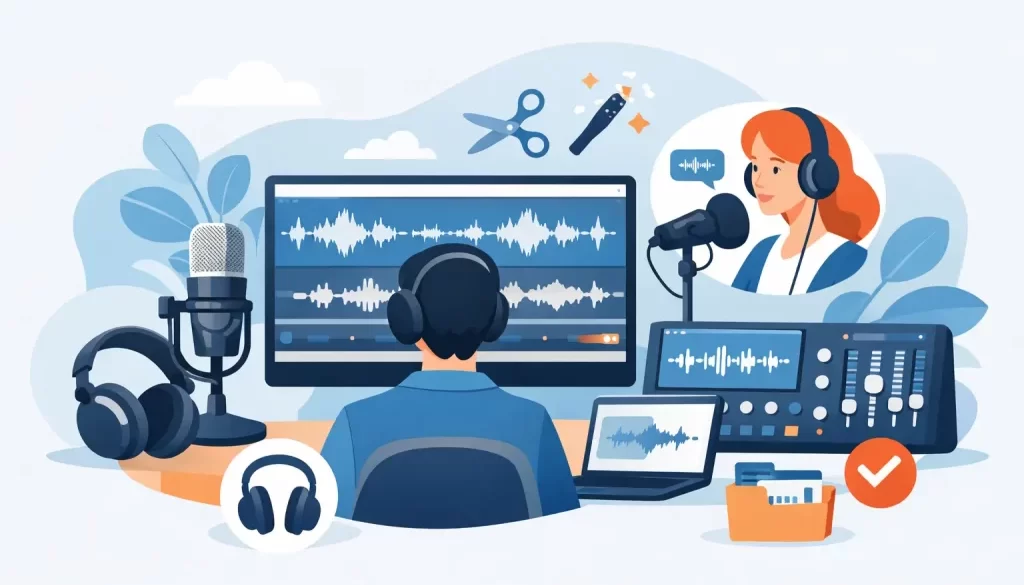
At first glance, editing can look interchangeable. Remove a few ums, level the audio, export the file, publish the episode. In reality, the difference between a basic edit and a commercially strong production is usually heard in the details.
A good editor is not only cleaning sound. They are protecting flow, pacing and listener attention. They know when to tighten a pause and when to leave one in place. They can hear when a conversation needs structure rather than just noise reduction. They understand that a business podcast has a job to do, whether that is building authority, generating leads, supporting a launch or strengthening a brand.
This is where many podcasters make the wrong comparison. They compare editing services on price alone, when the better question is what the service helps the podcast achieve. A cheaper edit may save money per episode while quietly costing you audience trust over time.
What a professional editing service should actually improve
If you are paying for professional support, the outcome should be obvious. Your show should sound cleaner, more consistent and easier to listen to from one episode to the next.
That starts with technical quality. Audio should be balanced, intelligible and free from distractions where possible. Volume should feel consistent across speakers and episodes. Music, intros and outros should sit properly in the mix rather than overpowering the host.
But the strongest editing services also improve the listening experience. They tighten rambling sections, reduce repetition and make interviews feel more purposeful. Done well, this does not make the host sound artificial. It makes them sound prepared, credible and worth listening to.
For commercial podcasts, that matters. Better retention gives your message more chance to land. It gives sponsors more confidence. It helps prospects stay engaged long enough to trust your expertise. Editing is not the entire growth strategy, but it supports every part of it.
Human editing versus automated processing
This is one of the biggest decisions in the market. Some providers lean heavily on automated tools and AI-led workflows. These can be fast and cheap, and in certain cases they are adequate for straightforward clean-up. If your only goal is to remove obvious noise from a solo recording, automation may appear to do the job.
The trade-off is judgement. Software can detect patterns. It cannot reliably interpret tone, comedic timing, emotional pauses, interview chemistry or the point where tightening an episode starts to damage its natural feel. Long-form conversations, multi-speaker recordings and branded content usually need a human ear.
Manual editing takes more time, but it is often the difference between an episode that sounds processed and one that sounds polished. For hosts building authority, that distinction matters. Listeners may not know why a show feels more professional, but they can hear it.
What to look for when choosing a provider
The best fit depends on your stage, format and publishing schedule. A new podcaster may need more than editing. They may need equipment guidance, publishing support and reassurance that they are setting things up properly from the beginning. An established brand may care more about workflow reliability, quick turnaround and the confidence that every episode will meet the same quality standard.
In both cases, communication matters. If you are handing over your show, you need to know who is working on it, how feedback is handled and what happens if something urgent changes. A single point of contact is often more valuable than people realise. It removes confusion and gives you consistency in quality and decision-making.
It is also worth asking how bespoke the service really is. Some podcasts need light clean-up and level balancing. Others need multi-track editing, content tightening, ad insertion, trailer support or fast-turnaround delivery. There is nothing wrong with standard packages, but a rigid service can become a poor fit very quickly if your show has more complex needs.
Podcast editing services in the UK for new and established shows
The UK market includes everyone from freelancers offering basic edits to premium production partners supporting commercial podcasts. Neither option is automatically right or wrong. What matters is whether the service level matches the role your podcast plays in your business.
If you are launching a show for lead generation, authority building or monetisation, a low-cost editor with limited support may not be enough. Early mistakes in format, sound quality and publishing setup can be difficult to undo later. Launch-stage support often saves time, avoids avoidable technical issues and gives the show a stronger foundation.
If your podcast is already established, reliability becomes just as important as editing quality. You need a provider who can work to deadlines, manage repeatable processes and maintain standards over months, not just one impressive sample episode. Consistency is what turns a podcast from a side project into a dependable brand asset.
Pricing, turnaround and the real value question
Podcast editing prices vary widely across the UK. That is not always a sign of overcharging or undercutting. It often reflects what is included.
A simple edit for a clean solo recording is very different from a multi-track guest interview that needs detailed clean-up, timing adjustments, music placement and publishing support. Faster turnaround also tends to carry a premium, especially for shows on weekly or high-volume schedules.
The real question is whether the service saves enough time and improves enough quality to justify the investment. For busy founders and teams, editing is often a poor use of internal time. It is repetitive, technical and easy to underestimate. When a professional partner handles post-production properly, you free up time for recording, marketing and business development while knowing the finished product reflects well on your brand.
That is why serious podcasters increasingly view editing as infrastructure rather than admin. It supports output, protects standards and reduces the risk of rushed, amateur-sounding episodes making it into the world.
Signs a service is built for commercial credibility
A credible provider should be able to explain more than the mechanics of editing. They should understand how audio quality supports growth, trust and monetisation. They should also be clear on process, responsive in communication and realistic about what editing can and cannot fix.
For example, a strong editor can dramatically improve rough recordings, but they cannot turn poor microphone habits into studio-quality audio every time. Good providers will help you improve both the source recording and the post-production result. That kind of guidance is especially useful for first-time hosts.
Social proof also helps, but it should support the service rather than replace substance. Testimonials, recognised clients and visible experience matter because they reduce risk. Still, the most useful sign is often how a company speaks about your show. If they focus only on files and turnaround, you may get a transactional service. If they ask about audience, goals and publishing plans, they are more likely to understand the bigger picture.
For that reason, many podcasters prefer founder-led businesses such as Pure Podcasting Ltd, where support feels personal and decisions are made with the client’s outcomes in mind rather than pushed through a generic production system.
When it is worth upgrading your editing support
There are a few moments when moving to a higher level of service makes clear sense. One is when your show starts representing your business more directly, especially if clients, partners or sponsors are listening. Another is when publishing becomes inconsistent because editing is taking too long internally.
It is also time to review your setup if your episodes sound different from one week to the next, your guests vary in audio quality, or your content is strong but retention is weaker than expected. Sometimes the issue is content strategy. Sometimes it is the listening experience. Often, it is both.
A stronger editing partner will not solve every podcast problem. But they can remove a major source of friction and help your content land the way it should. That is a meaningful shift when your podcast is meant to generate trust and commercial opportunity, not just fill a content calendar.
If you are comparing podcast editing services in the UK, look beyond who can deliver an MP3. Look for the service that helps you sound your best, publish with confidence and treat your podcast like the business asset it is becoming.
Take advantage of our lowest price Essential Done-For-You Professional Podcast Editing or if you need help starting a podcast enjoy a huge 80% OFF our Forbes-recommended Podcast Launch Package today!
On a budget? Want to edit your podcast yourself? Stop Guessing. Start Monetising – Download our Pro Podcast Audio Editing Kit Template– broadcast quality results within minutes – just drag in your audio GET INSTANT ACCESS – LIMITED LAUNCH OFFER
Sound your best!