If your podcast sounds slightly off, your audience notices before they can explain why. A pause runs too long, one voice sits louder than the other, a distracting breath pulls focus, or the energy drops because the conversation was never properly shaped. That is where a human podcast editing service earns its place – not by applying generic processing, but by making deliberate decisions that protect the quality of your show and the credibility of your brand.
For serious podcasters, editing is not an admin task. It is part of the listener experience. It affects retention, authority, and whether someone comes back for the next episode. If your podcast supports a business, sells expertise, or represents a public-facing brand, the standard of production matters more than most people realise.
What a human podcast editing service actually does
A good editor is not simply removing ums and levelling the volume. They are listening for pacing, clarity, tone, and consistency. They are deciding what stays, what goes, and how each change affects the flow of the episode. That judgment is the difference between a podcast that sounds processed and one that sounds professional.
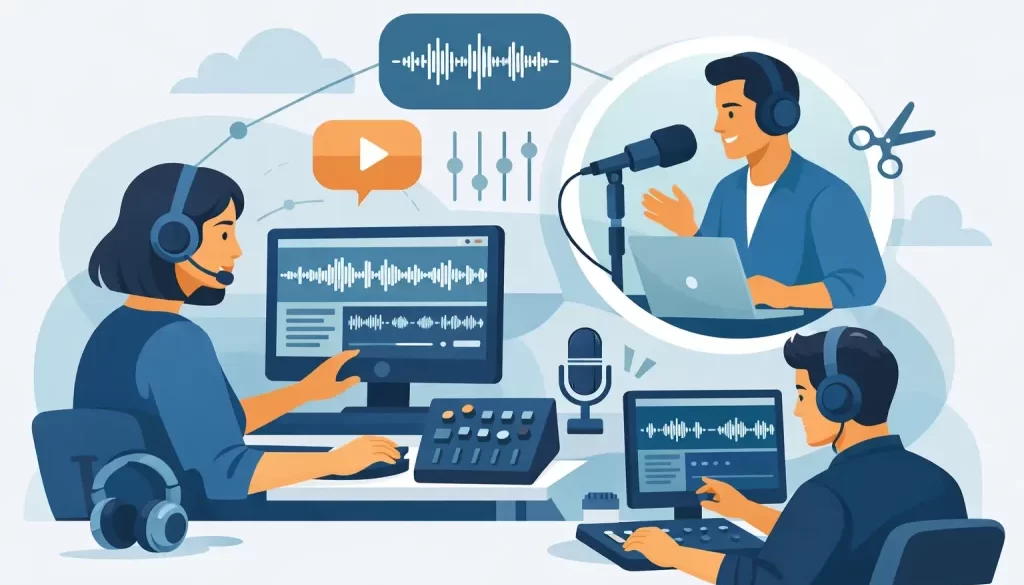
With a human podcast editing service, the work is manual and intentional. That usually includes cleaning background noise where possible, balancing speakers, tightening awkward gaps, reducing repetition, removing obvious mistakes, and shaping the episode so it feels confident and easy to follow. In more advanced productions, it can also include multi-track editing, music placement, ad insertion points, video podcast clean-up, and preparing episodes for a reliable publishing schedule.
The real value is not just technical. It is editorial. A human editor understands context. They know when a pause adds weight, when a tangent hurts momentum, and when a rough edge should stay because it sounds natural. Automation cannot make those calls with the same consistency.
Why manual editing still matters
AI tools and automated processors have their place. They can speed up repetitive tasks and help with basic clean-up. For some hobby podcasts, that may be enough. But if your show supports your reputation, your clients, or your revenue, basic is rarely the standard you want attached to your name.
Manual editing matters because podcasting is not only about sound quality. It is about perception. Listeners form quick judgements about whether a show feels trustworthy, established, and worth their time. Poorly balanced audio or clumsy edits can make even a strong host sound underprepared.
There is also the issue of nuance. Two hosts speaking over each other, a remote guest with patchy audio, a thoughtful pause before an important point, laughter that runs slightly too long – these are not simple technical problems. They require human judgement. A machine may flatten them all. A skilled editor shapes them.
That is particularly important for founders, consultants, authors, and brands using a podcast as part of a wider commercial strategy. If the show is meant to build authority, attract opportunities, or support monetisation, production quality needs to align with that goal.
Podcast Audio Pro Kit (Logic Pro Template for Podcast Editing)
Human podcast editing service vs automated tools
The comparison is not really about old versus new. It is about suitability.
Automated editing tools are built for speed and scale. They can remove some filler words, apply loudness standards, and tidy obvious inconsistencies. They are useful when budget is tight or turnaround is the only priority. But they often treat every episode as if the same rules apply, and podcasting rarely works that neatly.
A human editor works episode by episode. They notice if a guest answer is valuable but rambling. They hear when a host is interrupted and can restore the rhythm. They can reduce distractions without stripping the conversation of personality. That gives you a cleaner end product, but also a more engaging one.
There is a trade-off, of course. Human editing takes more time and usually costs more than automation alone. That is because you are paying for expertise, not only software. For commercially minded podcasters, that is often a sensible investment. The cost of sounding amateur can be much higher than the cost of editing properly.
Who benefits most from a human-led approach
Not every podcast needs the same level of support. A solo hobby show recorded in a treated room has different needs from an interview-based business podcast with multiple remote contributors. But there are clear cases where a human-led service makes the strongest difference.
First-time podcasters benefit because they often need more than editing. They need guidance on recording standards, episode structure, workflow, and what listeners actually expect. A dedicated editor can spot recurring problems early and help improve the production process before bad habits become the norm.
Established hosts benefit because consistency becomes harder as the show grows. Once you have guests, sponsors, deadlines, and audience expectations, reliable post-production is not optional. It is part of running the show professionally.
Brands and businesses benefit because podcasting reflects directly on the wider business. If the audio feels rushed or inconsistent, the brand does too. A polished production supports trust, especially when the audience may be discovering your business for the first time through the podcast.
What to look for in a human podcast editing service
Not all editing services are equal, and pricing alone tells you very little. The better question is whether the service improves the finished show and removes pressure from your workflow.
Look for a provider that offers clear communication, dependable turnaround times, and one-to-one support. That matters because podcast production often involves small decisions that affect the final result. If feedback loops are slow or inconsistent, publishing becomes harder than it needs to be.
It is also worth looking at how the service handles complexity. Can they manage multi-track recordings? Do they work with long-form conversations? Can they support regular publishing and changing production needs? A service designed around serious podcasting should not fall apart as soon as your show becomes more ambitious.
Most importantly, ask whether they understand the purpose of the podcast. Editing a branded leadership show is different from editing a casual chat programme. The right service should recognise your goals and edit accordingly, whether that means preserving warmth, tightening authority, or keeping pace sharp enough to support listener retention.
Editing quality affects growth more than people think
A podcast does not grow on content alone. It grows when good content is presented in a way that people want to keep listening to. That means the episode needs to feel easy, polished, and worth the time investment.
This is where editing influences outcomes that many hosts care deeply about – completion rate, repeat listening, referrals, and monetisation. If your show sounds more credible, your offers sound more credible. If the listening experience feels considered, your audience is more likely to trust the advice, product, or brand behind it.
That is why professional editing should be viewed as part of the business model, not just part of production. It supports the way your podcast performs in the market. For some shows, that translates into sponsorship readiness. For others, it means better lead quality, stronger authority, or a more premium listener experience that reflects well on the wider brand.
For businesses that want a high standard without a fragmented process, working with an experienced provider such as Pure Podcasting can also bring another benefit: continuity. A single point of contact, consistent standards, and direct support make production less stressful and far more dependable.
The strongest podcasts still sound human
There is a common mistake in podcast production: chasing perfection so hard that the show loses its character. A well-edited episode should sound clean and confident, but not sterile. Listeners still want warmth, personality, and a sense that real people are speaking.
That is another reason human editing matters. The goal is not to iron out every breath or cut every pause. The goal is to make the show sound its best while keeping what makes it believable. Good editors know where polish helps and where it starts to get in the way.
If your podcast matters to your brand, your audience, or your income, it deserves more than a one-click fix. The right editing support gives you better audio, a stronger workflow, and a show that sounds ready for the audience you want to attract. And when listeners can hear the difference, they are far more likely to stay.