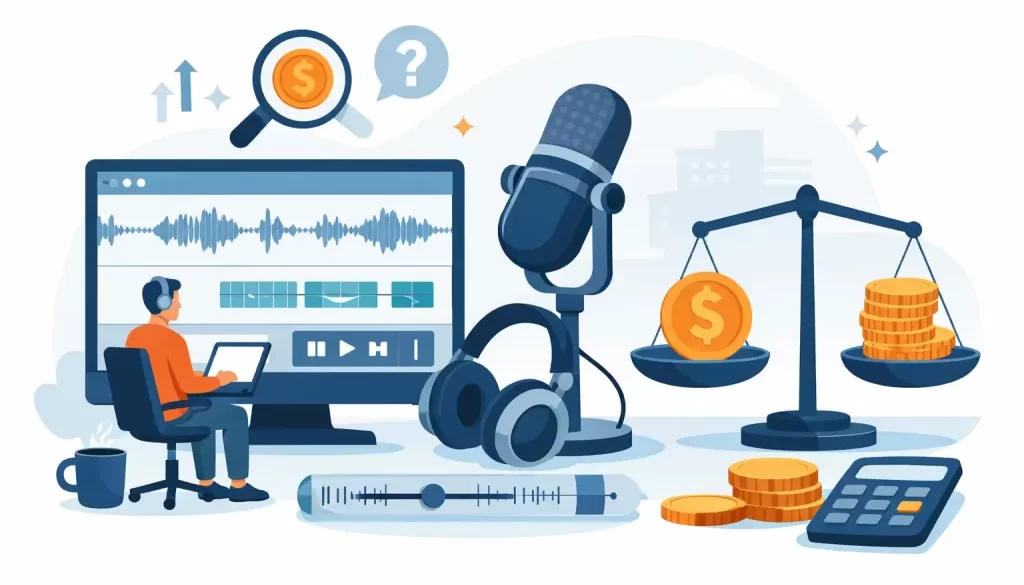
If you are asking how much does a podcast editor cost, you are probably already feeling the trade-off. You can spend hours trimming mistakes, balancing levels and removing distractions yourself, or you can hand it to a professional and get that time back. The real question is not just what the invoice says. It is what poor editing costs your show in credibility, listener retention and missed commercial opportunities.
Podcast editing prices vary widely because podcast editing is not one fixed task. A simple solo episode with clean audio and minimal corrections costs far less than a multi-track interview with cross-talk, background noise, music placement and a same-day deadline. That is why some editors charge what looks like a bargain, while others price at a premium. They are not always selling the same thing.
How much does a podcast editor cost in practice?
In the UK market, basic podcast editing often starts from around £40 to £80 per episode for straightforward recordings. That usually suits short solo shows or cleanly recorded interviews that need light polishing rather than substantial repair.
For more involved editing, many podcasters can expect to pay roughly £80 to £250 per episode. This is the range where most serious business podcasts sit. It often includes manual clean-up, tightening pacing, removing filler words or mistakes, levelling volume, exporting final files and preparing the episode to a publishable standard.
At the premium end, pricing can move beyond £250 per episode, especially for branded podcasts, long-form shows, multiple hosts, multi-track edits, narrative formats or fast-turnaround work. If your podcast supports a wider business, sells services, attracts sponsors or represents a recognised brand, paying more for dependable editing is usually a commercial decision rather than a luxury.
Some editors also charge by the hour rather than by episode. Typical rates can range from £25 to £100+ per hour depending on experience, reputation and the complexity of the work. Hourly pricing can work well for irregular projects, but many podcasters prefer fixed per-episode rates because they are easier to budget for.
Why podcast editing prices vary so much
The largest factor is complexity. A 20-minute monologue recorded on a good microphone in a quiet room is relatively efficient to edit. A 60-minute remote interview with patchy internet audio, overlapping speakers and several retakes is not.
Manual human editing also costs more than automated processing, and for good reason. AI tools can remove some background noise and automate a few repetitive jobs, but they still struggle with judgement. They do not reliably know what to cut for pace, what to keep for personality, or how to shape an episode so it sounds natural rather than over-processed.
That difference matters if your podcast is part of your brand. Listeners may not know the technical term for clipping, room tone or inconsistent loudness, but they do notice when a show sounds amateur. They also notice when it sounds calm, clear and easy to follow. Good editing supports trust.
What you are actually paying for
When clients compare quotes, they often focus on minutes of audio. That is understandable, but it is only one part of the picture. What matters more is the editing depth and the level of support around it.
A lower-cost service may only run noise reduction, top and tail the file, and send it back. That can be enough for hobby shows or internal content that does not need much refinement.
A more professional service usually goes further. It may include detailed listening, manual removal of distractions, balancing multiple voices, fixing pacing issues, integrating music, checking technical consistency, exporting in the right formats and being available if you need changes quickly. That is not just admin. It is quality control for your public-facing content.
For business owners, authors, consultants and brands, that distinction matters. Your podcast is often the longest amount of time a prospect will spend with your voice before buying from you. If the production quality feels careless, the commercial impact can be larger than the editing fee itself.
The main factors that affect cost
Episode length matters, but raw recording length matters even more. A polished 30-minute episode might come from 50 minutes of source audio, or from two hours of conversation. The latter naturally takes longer.
The number of speakers also affects the price. Editing one voice is simpler than editing three or four, especially if people interrupt each other or use different microphones in different environments.
Audio quality plays a big role too. Clean recordings are quicker to process. Audio with hiss, echo, traffic noise or inconsistent levels takes more care, and sometimes more restoration work, to make it comfortably listenable.
Turnaround time can raise the fee. If you need a 24-hour or same-day edit, you are not only paying for the edit itself. You are paying for priority and schedule disruption.
Then there is scope. Some clients only want editing. Others want help with episode structure, intros and outros, publishing, launch planning or monetisation support. Once a service includes strategic input and ongoing technical guidance, pricing moves beyond basic post-production.
Cheap editing versus valuable editing
It is tempting to choose the lowest quote, particularly when you are launching a new show and trying to keep costs under control. Sometimes that is perfectly reasonable. Not every podcast needs premium production from day one.
But cheap editing becomes expensive when it creates more work for you, delays publishing or leaves you with inconsistent quality. The hidden cost is often time. If you still have to review every file closely, chase replies, explain the same preferences each week and fix small issues before release, the lower fee is not really saving you much.
Reliable editing has value beyond the audio itself. It supports a consistent publishing rhythm, protects your brand reputation and gives you confidence to promote the show. That confidence is hard to put in a spreadsheet, but it is often what helps a podcast become commercially useful rather than just another unfinished content idea.
Should you pay per episode or monthly?
Per-episode pricing works well if you publish occasionally, are testing a new concept or want flexibility. It is simple and easy to compare.
Monthly retainers are often better for regular podcasters who release weekly or fortnightly episodes. They can offer better value, clearer planning and a steadier workflow. They also help build consistency, because your editor gets to know your voice, preferred pacing, brand style and audience expectations over time.
That familiarity is one of the biggest advantages of working with an experienced editing partner rather than shopping for the cheapest freelancer each month. Less briefing. Fewer corrections. Better output.
How much should your podcast budget be?
A useful rule is to match your editing budget to the role your podcast plays in your business. If it is a passion project with no revenue goal, you may choose a lighter service and keep costs lean.
If your podcast is part of your lead generation, authority-building or client nurture strategy, quality deserves more budget. A show that helps sell consultancy, attract speaking work, support a book launch or build sponsorship potential should be treated like a business asset. In that context, editing is part of marketing and brand delivery, not just post-production.
This is often where professional support pays for itself. A polished show can improve listener trust, keep people listening longer and make your content more usable across your wider commercial ecosystem.
How to choose the right editor, not just the cheapest
Ask what is included, how revisions are handled, what turnaround looks like and whether the work is done manually or mostly through automated tools. You should also ask who will actually edit your show. A dedicated point of contact usually creates a smoother experience than passing files through a faceless production queue.
Look for responsiveness and consistency as much as technical ability. Podcasting works best when the workflow feels dependable. If your editor communicates clearly, understands your goals and helps you sound your best every time, that relationship becomes part of your production advantage.
For podcasters who want a more commercially credible show, a service-led approach tends to outperform a bargain-basement one. That is especially true if you are building a brand-led podcast, selling expertise or trying to create long-term audience trust. Pure Podcasting Ltd is one example of that more hands-on model, where manual editing and direct support are built into the value rather than treated as optional extras.
So, how much does a podcast editor cost?
Most podcasters will land somewhere between £40 and £250 per episode, with premium and bespoke projects going higher. The right number depends on your format, your recording quality, your schedule and how important the podcast is to your wider business goals.
If you are choosing between doing it yourself and hiring support, do not only ask what editing costs. Ask what your time is worth, what your audience hears, and what standard your brand needs to meet every time you publish. The best editing fee is not the lowest one. It is the one that makes your show sound like it deserves to be heard.