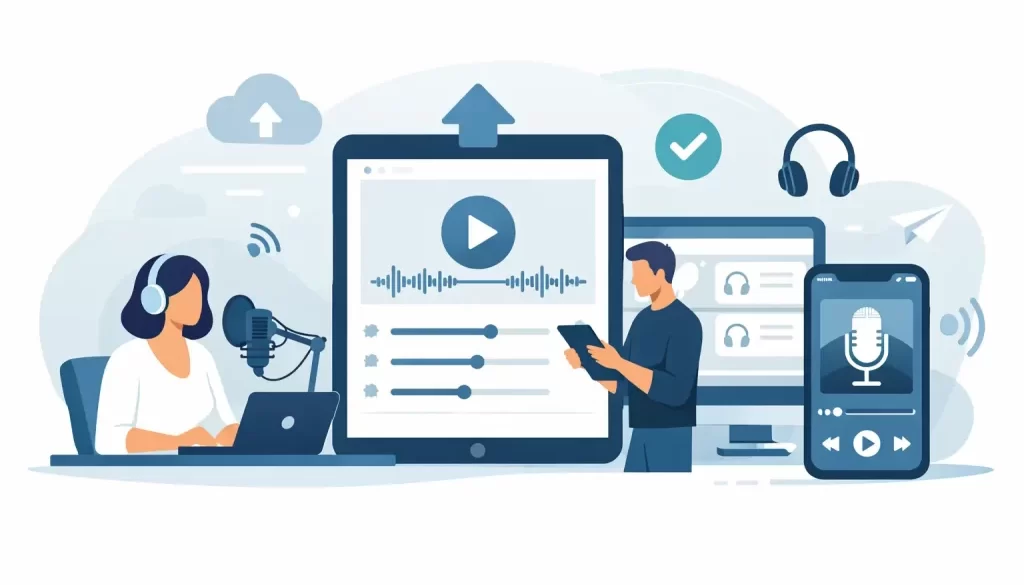
A finished edit is not yet a published episode. The final stage – uploading, writing the episode details, scheduling distribution and checking the live release – is where an otherwise excellent production can lose momentum. Knowing how to publish podcast episodes properly gives your show the consistency and credibility listeners, sponsors and prospective clients expect.
For a business podcast, publishing is not a technical afterthought. It is part of the listener experience. A confusing title, an unhelpful description, an incorrect release date or an episode that appears without artwork can make a polished show feel rushed. A dependable workflow protects your reputation and makes it far easier to grow a catalogue that supports your commercial goals.
How to publish podcast episodes: the core process
Most podcast publishing happens through a podcast hosting platform, not by manually uploading a file to every listening app. Your host stores the audio file and creates an RSS feed – the feed that Apple Podcasts, Spotify, Amazon Music and other directories use to collect new episodes.
Once your show is connected to the major directories, you generally publish each new episode in one place. The host then updates the RSS feed, and the listening platforms collect the release. This is why choosing a reliable host and setting it up correctly from the start matters. Moving hosts later is possible, but it adds unnecessary technical work at a time when your focus should be on your audience.
Before you upload, make sure you have four essentials ready: the final audio master, episode title, description and suitable episode artwork if you use custom artwork. It is also sensible to have your release date, call to action and promotional copy agreed in advance.
Export the right audio file
Your editor should supply an audio file that is ready for podcast distribution, usually an MP3. The file needs to sound clear and consistent across headphones, car speakers and mobile devices, without excessive volume changes, distracting breaths, background noise or abrupt edits.
File size matters, but quality should not be sacrificed simply to make an upload quicker. Very large files can be inconvenient for listeners on mobile data, while over-compressed audio can make a premium interview or branded series sound thin. The right setting depends on the format of your show, whether it is spoken word, video-led audio or music-heavy content.
A professional final listen remains worthwhile. Check the opening and closing, any sponsor messages, names, music transitions and sensitive claims. A small error can be difficult to correct once subscribers have downloaded the episode.
Upload to your podcast host
Log into your hosting account and create a new episode. Upload the final file, then wait for the platform to process it fully before completing the rest of the fields. Avoid uploading an unapproved draft simply to get ahead. Replacing an audio file after publication can create confusion, particularly if early listeners have already downloaded the first version.
Select the correct episode type. In most cases, this will be a full episode. Trailers and bonus episodes should be marked accurately so that apps display them as intended. If your show has seasons, confirm the season and episode number too. Clear organisation helps new listeners understand where to begin and gives your back catalogue a more professional structure.
Write metadata that earns the click
Metadata is the information attached to your episode. It affects how the episode appears in podcast apps and how easily people can understand its value before pressing play. It may not be glamorous, but it directly influences discoverability and conversion.
Give the episode a specific title
A title should tell the listener what they will get, not merely what was discussed. “Episode 14 with Sarah” gives no compelling reason to listen. “How Sarah Turned a Consultancy into a Retainer-Led Business” creates a clear expectation and speaks to a relevant audience.
Aim for clarity first. You can include the guest’s name where it adds authority or search value, but lead with the outcome, tension or question whenever possible. Keep the title readable on a mobile screen and avoid stuffing it with keywords.
Make the description useful
The first sentence carries the most weight because some podcast apps truncate the rest. State who the episode is for and why it is worth their time. Then add context: key topics, the guest’s credentials, practical takeaways and any resources or next steps mentioned in the conversation.
Write for humans rather than search engines. A concise, well-structured description with natural relevant terms will serve both. If your brand has a clear call to action – booking a consultation, joining a newsletter or exploring an offer – include it in a way that feels useful rather than intrusive.
Show notes can also include timestamps for longer interviews. They are particularly valuable when an episode covers several distinct themes, allowing busy listeners to return to a section that matters to them. However, timestamps need to be accurate. Incorrect chapter markers create more frustration than no markers at all.
Complete the publishing fields carefully
Set the explicit-content marker honestly, choose the right category and check that your author or publisher name is consistent across every episode. Add a season number where relevant, and use episode numbers consistently rather than changing the format halfway through a series.
If you publish a video podcast, ensure the video settings are intentional rather than treating video as an automatic add-on. Video can broaden reach, but it also raises expectations around framing, lighting, editing and captions. A strong audio-first show is often better than a poorly produced video version.
Schedule for consistency, not pressure
You can publish immediately or schedule an episode for a future date and time. Scheduling is usually the safer option for commercial shows because it creates space for final checks and lets your marketing activity align with the release.
There is no universal best day to publish. A weekly business show may perform well on a weekday morning when listeners are commuting or planning their week. A show aimed at leisure audiences may suit another pattern entirely. What matters most is choosing a cadence you can maintain. Weekly is useful only if it does not damage the quality of the conversations, editing or promotion.
For launch periods, publishing several episodes at once can give new listeners enough material to decide whether they want to subscribe. After that, a consistent release rhythm builds trust. If circumstances mean you need to pause, communicate clearly rather than disappearing without explanation.
Check the live episode before promoting it
Once the episode is published, do not assume the job is finished. Open the live listing in your hosting dashboard and in the primary podcast apps used by your audience. Confirm that the title, description, artwork, episode number and audio playback all look right.
Listen to the first minute and jump to a point later in the file. This catches upload errors, missing sections and unexpected silence. Check that the call to action is appropriate and that any links or contact details in the show notes are correct before your promotional activity sends people there.
Directory updates are not always instant. Your host may show the episode as published before every app has refreshed its feed. That is normal, so build a little buffer into your launch plans rather than promising an exact minute across every platform.
Turn each release into a commercial asset
Publishing makes the episode available. Promotion gives it a chance to perform. Share a clear angle from the conversation through your chosen channels, whether that is a short video clip, a quote, a newsletter introduction or a thoughtful post written for your professional network.
The strongest promotion does not try to summarise a full hour of audio. It identifies one idea that makes the right listener curious enough to hear more. If the episode supports a service, product or event, connect that offer to the listener’s problem naturally. The conversation should lead; the sales message should support it.
Over time, review which subjects, guests and episode formats retain listeners. Downloads alone are useful, but they do not tell the whole story. Completion rates, subscriber growth, enquiries and sales conversations often reveal more about whether the podcast is doing meaningful work for the business.
When publishing support is worth having
Many hosts can learn to publish confidently, particularly with a documented checklist. But if you are recording interviews, leading a business, managing guests and using the podcast to generate authority, publication can become another task competing for limited time.
Support is especially valuable when you need dependable turnaround, consistent audio standards and someone to spot issues before an episode reaches the public. A managed workflow can cover editing, file preparation, metadata guidance and scheduled publishing while leaving you free to focus on the conversation and the wider business purpose behind it.
At Pure Podcasting, the aim is not simply to get an episode online. It is to help each release sound considered, look credible and give listeners a reason to come back. Treat publication with that same level of care, and your podcast will feel less like content to keep up with and more like a dependable asset your audience can trust.