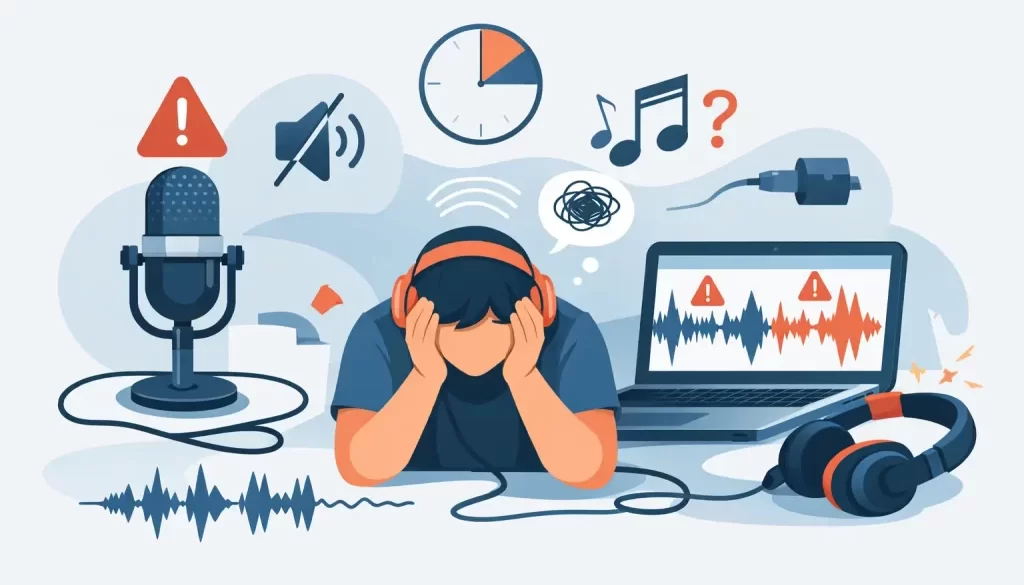
A listener will forgive a lot in the first minute of a podcast. They will forgive a slightly nervous host. They will forgive a slow opening. What they rarely forgive is poor sound. If you are serious about building a credible show, these are the podcast audio mistakes to avoid first, because audio quality shapes trust before your content has had a chance to do its job.
For founders, brands, consultants and creators, this is not a minor production detail. It affects listener retention, perceived authority and whether your show sounds commercially viable. A strong podcast can support sales, partnerships and audience growth. A weak-sounding one can quietly undermine all three.
Why podcast audio mistakes matter more than most hosts realise
When podcast audio is inconsistent, listeners notice immediately, even if they cannot explain what is wrong. Harsh volume changes, echo, background noise and clumsy edits create friction. That friction leads to drop-off.
This matters even more if your podcast represents a business. Your audience will often judge your professionalism by the standard of your production. If the sound feels rushed or amateur, they may assume the same about your service, product or brand. Good audio does not need to sound overproduced, but it does need to sound intentional.
The podcast audio mistakes to avoid from the start
1. Recording in the wrong space
Many podcast problems begin long before editing. A good microphone cannot rescue a bad room. If you record in a kitchen, a large office or a hard-walled spare room, you will often get reverb, reflection and a distant sound that makes the episode feel cheap.
The fix is usually practical rather than expensive. Soft furnishings help. Curtains, carpets, cushions and even recording closer to wardrobes or bookshelves can reduce reflections. The goal is a dry, controlled sound, not a studio fantasy. If you are launching a business podcast, choosing the right space early will save time, money and repeated frustration later.
2. Placing the microphone too far away
A common mistake is treating the microphone like a room mic rather than a close speaking tool. When the mic is too far from your mouth, your voice loses presence and the room becomes far more obvious. You also end up increasing gain, which brings up hiss and background noise.
In most cases, staying a few inches from the microphone produces a fuller and more reliable result. The trade-off is that poor mic technique becomes more noticeable, so you need a pop filter and a steady speaking position. But that is far easier to manage than trying to repair weak source audio in post-production.
3. Ignoring levels during the recording
If your recording is peaking, distorting or far too quiet, editing can only do so much. Distortion in particular is one of the most damaging podcast audio mistakes to avoid, because once a voice is clipped, the damage is often permanent.
Before recording, test your levels properly. Speak at your natural episode volume, not your polite pre-recording voice. If you laugh loudly or become animated during interviews, allow headroom for that. Consistent input levels make the whole production process smoother and help the finished episode sound controlled rather than chaotic.
4. Relying on built-in laptop audio
Laptop microphones and untreated video-call setups are still surprisingly common, especially for guest interviews. They are convenient, but convenience is not the same as quality. Thin, brittle audio makes even excellent conversations harder to listen to.
If guests are remote, simple preparation goes a long way. Ask them to use headphones, sit in a softer room and use an external USB microphone if possible. If they do not have one, there are still ways to improve the result, but preparation matters. The best remote interviews are usually the ones where the host has taken control of the setup before anyone presses record.
5. Leaving in too much background noise
Low-level hum, traffic, keyboard taps, chair squeaks and mouth noise may seem minor while editing, but repeated distractions wear listeners down. They make the experience feel less polished and less trustworthy.
That said, there is a balance to strike. Aggressive noise reduction can leave voices sounding metallic or unnatural. This is where manual editing matters. Thoughtful clean-up should improve clarity without stripping the life out of the voice. The right decision depends on the recording, the voice and the style of the show.
6. Editing for speed instead of flow
Over-editing is as real as under-editing. Some podcasts are cut so tightly that they sound mechanical. Every breath disappears, every pause is removed and the host starts to sound unnatural. Others are barely edited at all, leaving rambling starts, repeated phrases and long dead spaces.
Strong podcast editing is not just technical. It is editorial. It protects pacing, clarity and listener attention. A business podcast should sound polished, but still human. You want confidence and momentum, not a robotic rhythm. This is one reason professional editing has value beyond basic software processing.
Mistakes that damage listener trust over time
7. Inconsistent volume between episodes
One week your show is quiet, the next it is harsh and loud, and your guest episode sounds completely different again. That kind of inconsistency chips away at the listener experience.
Volume consistency is a fundamental part of professional production. It helps your podcast feel established and dependable. For regular shows, this is where having a repeatable workflow matters. Templates, reference points and proper mastering discipline keep the experience stable from episode to episode. If your show is part of a wider brand strategy, consistency is not optional.
8. Poor handling of multiple speakers
Multi-speaker episodes often expose weak production habits. One voice may be crisp and close, another quiet and echoey, and a third may interrupt constantly with no editing to smooth the exchange. The result feels messy, even when the content is strong.
Good multi-track editing can make a dramatic difference here. Balancing speaker levels, removing crosstalk, cleaning up interruptions and shaping the conversation for clarity all improve perceived quality. This is especially important for interview-led podcasts where the guest reflects directly on your brand.
9. Treating editing as a final polish rather than a core business asset
This is the bigger mistake underneath many of the others. Too many podcasters think editing is a cosmetic step once the real work is done. In reality, post-production is where your raw recording becomes a credible product.
Editing affects whether people keep listening, whether your message lands clearly and whether your show feels worth returning to. If you are using your podcast to build authority, attract clients or support monetisation, then audio quality is part of your commercial strategy. It is not just about sounding nice. It is about sounding trustworthy.
How to avoid podcast audio mistakes without overcomplicating production
The goal is not perfection. It is reliability. Start with a sensible recording space, use the microphone correctly, monitor levels and give guests clear guidance. Then make sure your editing process supports consistency rather than patching up preventable problems.
If you produce episodes regularly, it is worth asking whether your current workflow is sustainable. Many hosts can manage their own editing at the start, but the pressure builds quickly when publishing becomes frequent and quality expectations rise. At that point, expert support is less about outsourcing a task and more about protecting standards.
For commercial podcasts, that decision often pays for itself. Better audio helps listeners stay longer, take the show seriously and associate your content with professionalism. That is valuable whether you are building a personal brand, promoting a company or developing new revenue streams.
Pure Podcasting works with podcasters who want that level of polish without losing the human feel of their show. The difference is not just cleaner audio. It is confidence that every episode represents your brand properly.
The best time to fix your audio is before bad habits become your normal. A podcast does not need to sound flashy to succeed, but it does need to sound cared for. Listeners can hear the difference, and so can the clients, customers and partners you want to impress.